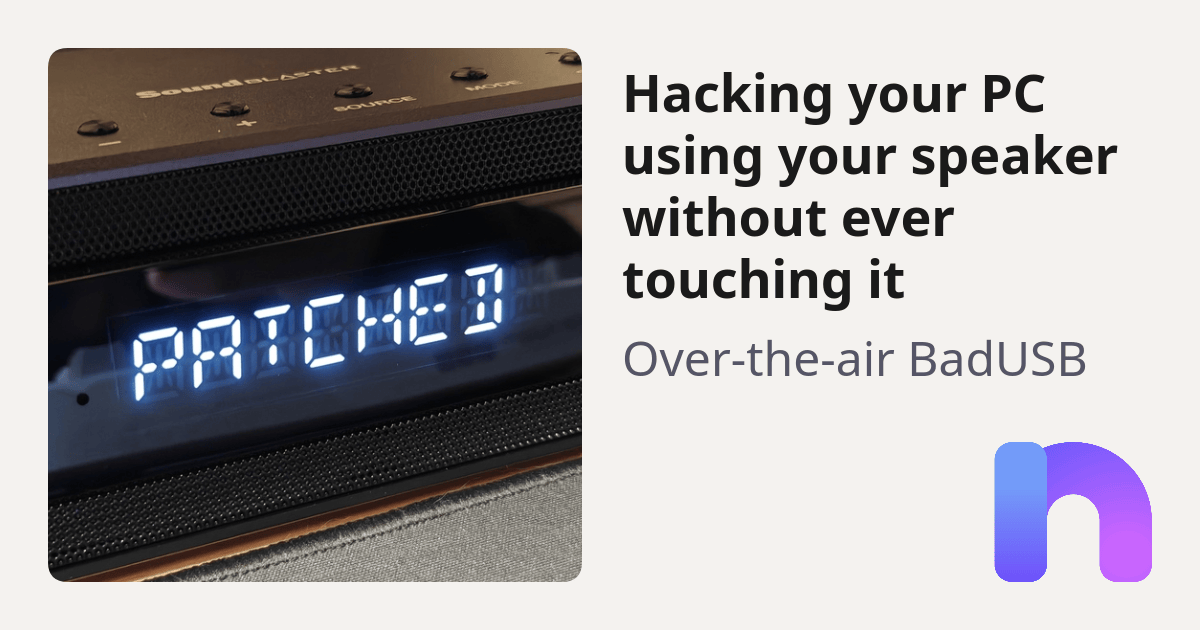
Speaker Hacking Threat: A New Cybersecurity Risk
Executive Summary:
- Hackers can wirelessly write custom firmware to a speaker connected to a computer via USB.
- This vulnerability can be exploited without pairing the speaker to the computer.
- Device manufacturers often overlook security risks in their software development process.
The Internet’s Verdict: 70% Hyped, 30% Skeptical
The Issue at Hand
A recent email from SingCERT stated that a vendor does not consider this to be a vulnerability, as it does not present a cybersecurity risk. However, this sentiment is not shared by all.
Email from SingCERT stating vendor "do not consider this to be a vulnerability, as it does not present a cybersecurity risk." So wirelessly writing custom firmware to someone else’s device that is connected via USB to their computer without even needing to pair is not a security vulnerability.
A Broader Perspective
Some experts think that the speaker itself can be used as the attacker, potentially spreading malware through the supply chain.
Why think so small? Perhaps the speaker itself can be used as the attacker. Any script kiddie with an LLM could write a worm that would spread through the supply chain, possibly even hacking speakers right on the factory floor and blasting Rickroll music or something similar.
Others point out that device manufacturers often overlook security risks in their software development process, leading to vulnerabilities like this one.
It is quite common to find device manufacturers, even those of many years standing, who _appear to_ begin with the device and add the software as an afterthought. Paying little attention to security or even the software lifecycle.
Focus Keyword: Speaker Hack